Category: NEWS

Patti Spadaro’s “Mystic Misfit” Is a Quiet Rebellion Against Disconnection

For much of the last decade, popular music has been obsessed with extremes. Extreme confidence. Extreme heartbreak. Extreme self-definition. Patti Spadaro’s “Mystic Misfit” takes a different route. It is a song about balance — not as a destination, but as an ongoing practice.

That may sound modest. In 2026, it feels almost subversive.

Spadaro approaches “Mystic Misfit” from a place where rock music intersects with mindfulness culture, but she avoids the pitfalls that often accompany that combination. The song does not attempt to sell enlightenment. It does not package spirituality as lifestyle branding. Instead, it presents self-awareness as work: imperfect, continuous, and deeply human.

Musically, “Mystic Misfit” exists in a space between roots rock, jam-band improvisation, and singer-songwriter reflection. The arrangement favors atmosphere over urgency. Eric Kurtzrock’s drums move steadily without forcing momentum, while Ryan Black’s bass provides warmth and stability. Cherylann Hawk’s harmony vocals drift around the edges of the song, softening its contours.

The center of gravity remains Spadaro herself.

Her voice is conversational rather than theatrical. She sings as someone thinking aloud, examining emotions in real time rather than presenting finished conclusions. That approach gives the song much of its appeal. There is vulnerability here, but it is not framed as spectacle. Instead, it feels like a deliberate act of openness.

The title, “Mystic Misfit,” immediately establishes the song’s central tension. It suggests someone who feels disconnected from dominant culture while still searching for belonging. Throughout the track, Spadaro treats that tension not as a problem to solve but as a reality to navigate.

The chorus distills the song’s larger philosophy into a single phrase: “Meet me in the middle.”

On one level, it functions as a personal reminder to remain centered. On another, it becomes a social statement. In a cultural moment increasingly defined by division and certainty, Spadaro proposes something less dramatic but potentially more difficult: listening.

The song’s most revealing moments arrive during the bridge, where references to nature, energy, synchronicity, and higher frequencies expand its scope. These ideas could easily drift into abstraction, but Spadaro grounds them through emotional specificity. She sings about them not as beliefs to be adopted but as experiences to be observed.

Her guitar solo reinforces that perspective. Rather than serving as a display of virtuosity, it acts as an emotional continuation of the lyric. The phrases rise and unfold patiently, expressing what words cannot fully capture. The solo becomes a form of reflection itself.

What makes “Mystic Misfit” compelling is its refusal to participate in the performance of certainty. The song acknowledges confusion, contradiction, and vulnerability without attempting to overcome them through force of will. Instead, it argues for presence.

That argument resonates because it feels earned.

Patti Spadaro has created a song that values awareness over reaction and connection over confrontation. In a culture that often rewards volume, “Mystic Misfit” discovers strength in attentiveness. Its message is simple but increasingly rare: slow down, listen carefully, and meet each other halfway.

–Joe Camaro

Read More

LoveSong Docuseries Premiering on Amazon Prime This Week

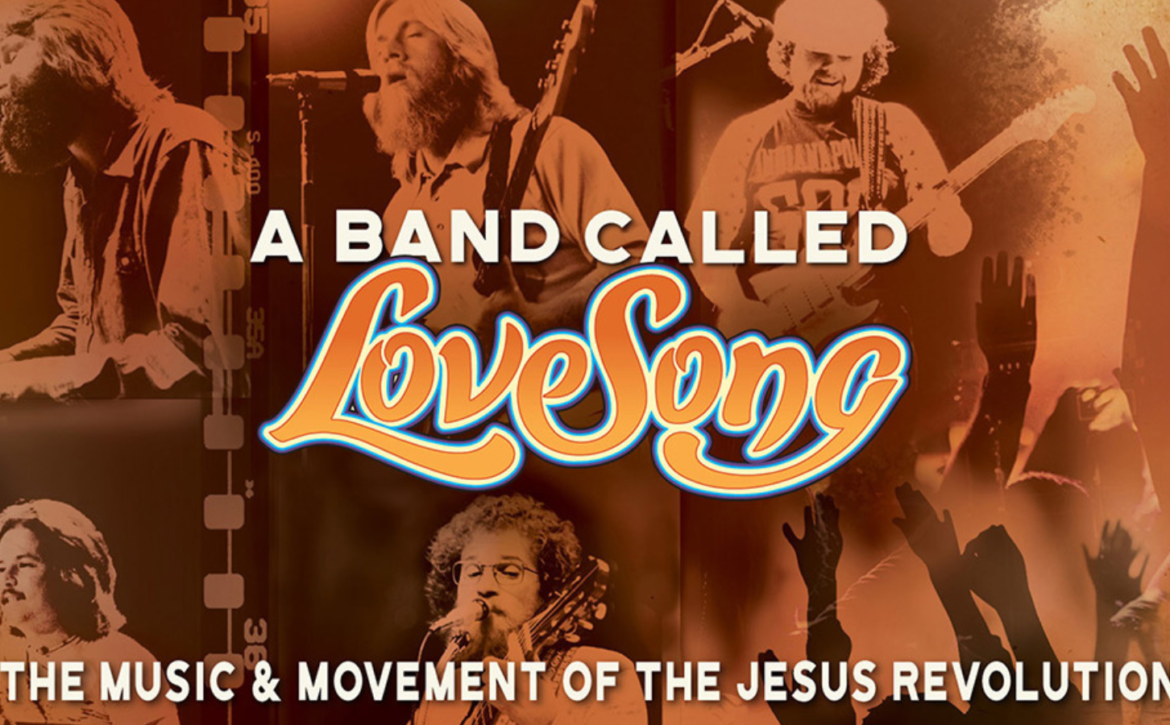
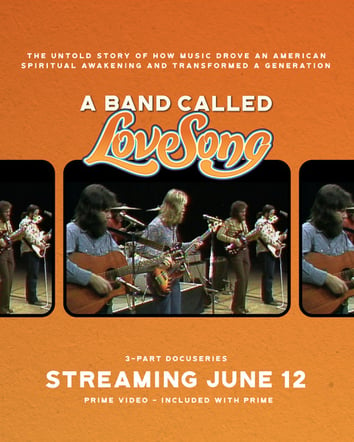
This week, Christian music fans will have the chance to relive Christian music history on Amazon Prime with the release of “A Band Called LoveSong”, a three-part docuseries highlighting one of the first Christian rock bands.

Originally launched in September 2025, Amazon Prime members can now watch “A Band Called LoveSong” for free beginning Friday, June 12th, on the streaming platform.

The documentary follows the untold, inspiring story of the first iconic Christian rock band and highlights how God moved in a mighty way back in the 60s and 70s during the Jesus Movement, transforming a generation.

Throughout the series, fans will get to experience a music-centric story of faith, hope, and the love that only Christ can bring.

You can learn more about LoveSong and watch the film at abandcalledlovesong.com.

Graphic 1

Read More

Curb | Word Music Publishing Signs Songwriter, Producer Christian Stalnecker

Curb | Word Music Publishing is thrilled to announce the signing of GRAMMY® nominated songwriter and producer, Christian Stalnecker.

Beginning his career in a Christian revival family band, Stalnecker grew up on a tour bus performing Southern Gospel/Christian music. As a teenager, Stalnecker emerged as a Pop artist by the name of Christian Davis, opening for Destiny’s Child, Christina Aguilera and the Backstreet Boys.

Relocating to Los Angeles, Stalnecker signed a publishing deal with Rodney “Darkchild” Jenkins/Sony ATV where he wrote and produced for El DeBarge, Lil Wayne, Dreezy, and Day26, among others. He’s also collaborated with artists like Boyz II Men, Warren G, and more.

unnamed (5)-Jun-09-2026-04-10-05-2050-PM

Top Row, From L to R: Curb’s Trevor Mathiesen; Jonathan Mason; Joseph Prielozny; Bryan Stewart; AIMWIDE’s Damien Wong-Ken; Curb’s Benson Curb

Bottom Row, From L to R: Frascogna Law Group’s Maggie Mabury; Christian Stalnecker; Curb’s John Nemoy

Relocating to Nashville, Stalnecker earned a spot as a Country hitmaker, co-writing multiple #1 airplay hits including “Different Man” (Kane Brown feat. Blake Shelton), “Rescue Me” (Chris Young), and multi-platinum “Thank God” (Kane Brown and Katelyn Brown), which topped the Country Airplay charts for two weeks, crossed over to Hot 100, Top 40 and Hot AC, and was named SESAC’s Nashville Song of the Year. Continuing to write and produce across genres with crossover appeal, Stalnecker’s additional credits include NKOTB, T-Pain, Rick Ross, Wale, Ludacris, 50 Cent, Snoop Dogg and more.

“Christian’s melody-first approach and ability to write hits that transcend genres make him a perfect fit for Curb | Word Music Publishing,” shares VP A&R and Publishing, Jonathan Mason. “We’re excited to support his next chapter as both a songwriter and artist.”

Stalnecker adds, “After all my years, the most important thing in my career is to be around people who truly believe in me and really want to work hard alongside me. I take my music career very personally, and Curb feels like a family.”

Read More

Provident Entertainment Announces Two New Promotions

Provident Entertainment announces the promotions of Josie Hardin and Reagan Hughes to director-level roles within the company. Josie Hardin has been promoted to Director, Digital Strategy, and Reagan Hughes to Director, Marketing.

Josie Hardin
Reagan Hughes

T to B: Josie Hardin, Reagan Hughes

Hardin joined Provident Entertainment in 2024 as Associate Director of Digital Marketing, overseeing digital strategy and audience development for artists including Brandon Lake, Zach Williams, Leanna Crawford and more.

She previously served as Digital Marketing Manager at Big Machine Label Group for three and a half years, leading campaigns for artists such as Tim McGraw, Carly Pearce, Midland, Rascal Flatts, and Jackson Dean. Hardin began her career at WME supporting booking and touring efforts for country artists and built a strong digital marketing foundation through freelance work during COVID, developing expertise in social media strategy, paid media, content creation, and audience growth.

“Since joining Provident, Josie has made a tremendous impact on our team and the artists she serves,” shares Todd Stepp, SVP, Provident Entertainment. “She has a great instinct for digital strategy and audience engagement, and she approaches every opportunity with creativity, excellence, and a desire to keep learning. What stands out most is her ability to turn ideas into results while building strong relationships along the way. This promotion is well earned, and I’m excited to see her continue to grow and lead in this new role.”

In her new role, Hughes’ roster will include Seph Schlueter, KB, bodie, Aaron Cole, Charles Weems, Michael Gabriel Monroe, Molly Kate Kestner and The Band JAREN. Hughes has built her career in Christian and Gospel music, leading digital marketing strategies that drive audience growth and music consumption.

She began her professional career at Capitol CMG supporting label priorities at DSPs including Spotify and Apple Music. In 2021, she moved into a Digital Marketing Manager role, managing strategy for more than 20 artists, including TobyMac, Crowder, Passion, and Tye Tribbett. Hughes joined Provident Entertainment in February 2024 as Associate Director of Digital Marketing, managing digital strategy for Seph Schlueter, Ben Fuller, SEU Worship, CAIN and more.

Stepp adds, “Reagan brings a unique combination of strategic thinking, marketing expertise, and genuine passion for both our artists and industry. She has played a vital role in helping expand the reach of our roster and consistently looks for new ways to connect music with audiences. Her leadership, work ethic, and commitment to serving both our artists and our team have made a significant difference, and I couldn’t be more excited to see her step into this new role.”

Read More

Syntax Creative Partners With Ginny Owens’ ChickPower Music

Syntax Creative has partnered with ChickPower Music, the thoughtful, faith-rooted independent record label owned by singer-songwriter, author and speaker Ginny Owens.

Founded in 2005, ChickPower Music is home to an extensive catalog from Owens, including worship recordings, acoustic releases, Christmas music, collaborations and songs that have helped define her independent creative work.

“Ginny Owens has the kind of catalog that reminds you songs do not need to be loud to last,” said Timothy Trudeau, CEO of Syntax Creative. “She has spent her career doing the hard thing well: writing music with actual weight to it. ChickPower Music is not just a place where those songs live. It is a label with history, purpose and a catalog worth carrying well.”

The first new release under the partnership is “Greater Is The Cross,” a single from Ginny Owens featuring Josh Bissell & The Church Will Sing, releasing Friday, June 12.

Written by Owens, Tony Wood and Sam Hart, and produced by Kyle Schonewill, “Greater Is The Cross” is a modern hymn that speaks to human regret without getting stuck there. The song moves through confession into release with honesty, framing mercy as a force that breaks the grip of shame.

“ChickPower Music has always been about releasing heartfelt and thoughtful music,” Owens said. “The digital marketplace gives us a way to connect with people all over the world, and Syntax understands both the creativity and the work it takes to do that well.”

Owens has spent nearly three decades making music rooted in faith, honesty and craft. Since releasing her bestselling debut album, Without Condition, she has recorded 11 critically acclaimed albums, five EPs and two Christmas projects, with defining songs including “Remember Me,” “Beautiful Saviour” and “If You Want Me To.” Her recordings have amassed millions of streams worldwide.

Owens is a three-time Dove Award winner, including New Artist of the Year in 2000, and a two-time ASCAP Award winner. Her songs have appeared across network television and film, and her music has taken her to the White House, Sundance Film Festival, Lilith Fair and the National Day of Prayer in Washington, D.C.

Read More

GMA Hip Hop Committee Presents The Artist’s Plate Workshop Next Week

Next Wednesday, June 17th, at 6:00 pm CT, the GMA Hip Hop Committee will host a special webinar as part of their Artist Lunch Table series, and you’re invited to attend!

The Artist’s Plate: Ingredients for Building a Sustainable Career was designed to equip creatives with practical, actionable insight for career growth.

Hosted by James “Trig” Rosseau, CEO of Holy Culture, attendees of the online event will have the chance to hear from Rebekah Espinosa (Prescription Only), Yoshi (PD/On-Air Personality, BOOST Radio), and DJ Focus (CEO, Da Fixx Radio Show).

GMA_ArtistPlate_4x5(5)(1)

The Artist Plate webinar will focus on sharing the core components behind a sustainable music career—including marketing, distribution, branding, administration, creative community, and production—using a clear, accessible framework.

If you’re an artist who wants to better understand how these areas connect, where to focus, and how to move forward with clarity and intention, don’t miss this free event!

Read More

Tauren Wells Partners With National Domestic Violence Hotline for Latest Music Video

Three-time GMA Dove Awards host and eleven-time GRAMMY nominee Tauren Wells is partnering with the National Domestic Violence Hotline (The Hotline) for the official music video for “Breathe On It.”

Directed by Josh Gicker (Gabby Barrett, Chase Matthew) the powerful video follows a child raised in a household with domestic violence into adulthood. When he starts to see old patterns emerge, he has a moment of clarity and chooses to break the cycle of abuse for the sake of the future of his family.

Since its release earlier this year, “Breathe On It” has garnered over 6 million streams and has entered the Top 15 Billboard Airplay & Mediabase Audience charts.

Stream & Enjoy

Read More

Finding Joy in the Everyday: Billy Ray Rock’s “I’m Happy” Celebrates Gratitude and Positive Living

In a world where so much music is driven by conflict, heartbreak, anger, or self-indulgence, Billy Ray Rock’s latest single, “I’m Happy,” offers something refreshingly different: gratitude. While the song is not marketed as a Christian release, its message aligns with many biblical principles about joy, contentment, and choosing a positive outlook regardless of life’s circumstances.

From the opening moments, “I’m Happy” establishes an uplifting atmosphere. Built on a smooth R&B groove, the track combines infectious rhythms, catchy melodies, and an easygoing vocal delivery that immediately invites listeners into its celebration of life’s blessings. Billy Ray Rock, who wrote, produced, and performed the song himself, creates a musical environment that feels welcoming and sincere.

Finding Joy in the Everyday: Billy Ray Rock’s “I’m Happy” Celebrates Gratitude and Positive Living

Stream & Enjoy

The song’s chorus is simple but effective:

“Because I’m happy… it’s something you should know ’cause I feel good, yo…”

That simplicity is part of its strength. Rather than presenting complicated philosophical ideas, Billy Ray Rock focuses on a straightforward truth: there is value in recognizing and appreciating the good things in life. As Christians, we are reminded in 1 Thessalonians 5:18 to “give thanks in all circumstances.” While “I’m Happy” never directly references Scripture, its spirit of gratitude echoes that principle.

The verses focus on everyday victories that many listeners can relate to—making it through difficult times, catching a break, paying the bills, leaving stress behind, and enjoying the present moment. These may seem like small things, but often it is the small blessings we overlook. Billy Ray Rock’s lyrics encourage listeners to pause and recognize those moments instead of constantly focusing on what is missing.

One of the strongest aspects of the song is its refusal to dwell on negativity. The artist acknowledges that challenges exist. Clouds may appear on the horizon. Stress and drama remain part of life. Yet he chooses not to allow those things to control his perspective. That message is particularly relevant in today’s culture, where negativity often dominates headlines, social media feeds, and entertainment.

From a Christian perspective, joy is not merely an emotional reaction to favorable circumstances. It is a choice rooted in faith and gratitude. While Billy Ray Rock approaches the subject from a secular viewpoint, listeners of faith may find themselves connecting with the same underlying principle: the decision to focus on blessings rather than burdens.

Musically, “I’m Happy” succeeds because it practices what it preaches. The production is bright and energetic without becoming overwhelming. The groove moves effortlessly, creating a sense of motion and freedom. The arrangement leaves room for the vocals to breathe while maintaining a danceable rhythm that encourages listeners to move along with the music.

Billy Ray Rock’s vocal performance complements the song perfectly. Rather than relying on flashy vocal runs or dramatic emotional displays, he delivers the lyrics with confidence and authenticity. His relaxed approach makes the song feel genuine. Listeners get the sense that he truly believes what he is singing.

In many ways, “I’m Happy” serves as a reminder that joy can be contagious. A positive attitude has the power to influence not only our own lives but also the people around us. Proverbs 17:22 tells us, “A cheerful heart is good medicine.” This song captures that idea beautifully, offering three minutes of encouragement in musical form.

While it may not be a worship song or a Christian radio single, “I’m Happy” promotes values that people of faith can appreciate: gratitude, perseverance, optimism, and finding reasons to celebrate life’s blessings. In a culture often consumed by complaint and division, Billy Ray Rock has delivered a welcome reminder that happiness, thankfulness, and hope still have a place in modern music.

For listeners seeking a positive soundtrack to their day, “I’m Happy” lives up to its title—and that is something worth celebrating.

–Chris Beck

Read More

A Song of Rest in a Restless World: ARGYRO’s “Cool Shades”

In a culture that constantly demands more of us—more productivity, more attention, more noise—songs that invite listeners to slow down and breathe can feel like a gift. While ARGYRO’s latest single, “Cool Shades,” is not explicitly a Christian song, it contains themes that many believers may find surprisingly resonant: rest, refuge, peace, and the longing to escape the pressures of a weary world.

From its opening moments, “Cool Shades” creates an atmosphere of calm. Gentle rhythms, shimmering keyboards, and a relaxed vocal performance work together to transport the listener to a place of sunshine, water, and stillness. The imagery throughout the song—blue skies, cool shade, rolling waves, and golden sand—evokes a sense of sanctuary. It’s easy to hear the track simply as a carefree summer anthem, but beneath its polished surface lies a deeper emotional need: the desire for rest.

That desire is something Scripture speaks to repeatedly.

A Song of Rest in a Restless World: ARGYRO’s “Cool Shades”

Stream & Enjoy

Throughout the Bible, God is portrayed as a refuge and shelter for His people. Psalm 121 reminds us that our help comes from the Lord, while Psalm 91 speaks of dwelling in the shadow of the Almighty. Even the title “Cool Shades” brings to mind the biblical imagery of protection from heat and burden. In a spiritual sense, shade represents relief from hardship and a place where one can recover strength.

Argiro’s lyrics are intentionally impressionistic rather than direct. Lines such as “Walkin’ on water” immediately catch the attention of Christian listeners because of their obvious biblical association. In the context of the song, the phrase appears more symbolic than theological, yet it still evokes a sense of moving beyond ordinary limitations. Christians may naturally connect that image with faith, trust, and the miraculous power of God.

The repeated refrain, “In the cool, cool shade / On a blue, blue day,” functions almost like a meditation. It slows the listener down. In a world dominated by anxiety and distraction, there is something valuable about art that encourages stillness. While the song points toward a physical paradise of beaches and sunshine, believers may hear an echo of the deeper peace that comes through faith.

Musically, “Cool Shades” is exceptionally well crafted. Argiro performs lead and backing vocals, keyboards, bass guitar, ukulele, drums, percussion, and programming, creating a cohesive sound that feels both professional and personal. Rather than overwhelming the listener with excessive production, the arrangement leaves room to breathe. The result is music that feels restorative rather than demanding.

The song also avoids much of the cynicism that has become common in contemporary popular music. There is no bitterness here, no anger, and no glorification of destructive behavior. Instead, the track focuses on beauty, connection, and appreciation of simple pleasures. For Christian listeners seeking uplifting music without necessarily listening exclusively to faith-based artists, “Cool Shades” offers an encouraging alternative.

Perhaps the most compelling aspect of the song from a Christian perspective is its recognition that people need places of refuge. The world is often exhausting. We carry burdens, worries, disappointments, and fears. While ultimate peace is found in Christ rather than in beaches, vacations, or perfect weather, songs like “Cool Shades” remind us of our God-given need for rest and renewal.

Jesus Himself invited the weary to come to Him and find rest. That promise remains far greater than any earthly escape. Yet music can sometimes point us toward truths we already know in our hearts. In its own understated way, “Cool Shades” celebrates the human longing for peace, beauty, and shelter.

For believers, that longing ultimately finds its fulfillment not beneath a beach umbrella or behind a pair of sunglasses, but in the presence of God. Still, ARGYRO has created a thoughtful and uplifting soundtrack for those moments when we need to pause, breathe deeply, and remember that rest itself is one of God’s gifts.

–Chris Beck

Read More

The Promise of the Horizon: Harry Kappen’s “Distant Shore”

Songs sometimes arrive carrying more than the intentions of the people who wrote them. They gather stray meanings from history, from memory, from the fears and hopes that seem to circulate endlessly through culture. Listening to Harry Kappen’s “Distant Shore,” you begin with a song about refugees crossing dangerous waters, but somewhere along the way you find yourself hearing echoes of older journeys, older promises, and older disappointments. By the time the song ends, it feels less like a contemporary single than a dispatch from a place where longing itself has become a permanent address.

The premise is simple enough. Inspired by stories of refugees fleeing war, poverty, and desperation, Kappen imagines the experience of leaving home behind with no certainty that safety exists on the other side. Yet what makes“Distant Shore” compelling is that it never settles into the role of issue-oriented songwriting. It isn’t journalism set to music. It isn’t advocacy disguised as art. Instead, it enters that strange territory occupied by the best folk ballads, where a specific story begins dissolving into myth.

The opening lines establish the terms:

“I kiss the door I can’t replace…”

Immediately, a door becomes more than a door. It becomes every threshold ever crossed in hope or fear. It becomes the front porch left behind during the Dust Bowl, the train station in wartime Europe, the crowded airport terminal, the border crossing at midnight. American music is full of departures. The blues are departures. Country music is departures. Rock and roll itself often sounds like people trying to outrun something. Kappen taps into that lineage whether intentionally or not.

Musically, the song inhabits an intriguing space between progressive art-rock and contemporary singer-songwriter reflection. The mellotron that drifts through the arrangement inevitably recalls David Bowie’s “Space Oddity,” and Kappen has acknowledged that connection. But Bowie’s Major Tom floated away from Earth by accident, trapped between wonder and catastrophe. The narrator of “Distant Shore” is far more grounded. He is trapped by history, economics, geography, and circumstance. Yet both songs share an essential question: What happens when the familiar world disappears beneath you?

The answer remains uncertain.

That uncertainty is embedded in every aspect of the track. The arrangement moves forward without ever sounding fully settled. The rhythm suggests motion, but not arrival. The keyboards drift like weather systems. The guitars shimmer at the edges of the mix like distant lights glimpsed through fog. Everything feels suspended between destinations.

And then there is the chorus:

“Where is that distant shore?”

The line repeats like a prayer, but also like an accusation. It asks whether the promised destination actually exists. The history of migration is filled with visions of distant shores — America, Europe, freedom, opportunity, safety. Sometimes those promises prove real. Sometimes they dissolve upon arrival. The brilliance of Kappen’s lyric is that he leaves the question unanswered.

His vocal performance contributes enormously to the song’s emotional power. He sings without theatrical flourish, which allows the listener to focus on the story rather than the storyteller. There’s no attempt to transform suffering into spectacle. Instead, Kappen inhabits the material with a quiet dignity that feels earned.

What makes “Distant Shore” linger is its refusal to reduce human experience to ideology. The song recognizes migration not as a political talking point but as a recurring human drama. People leave. People search. People risk everything because remaining where they are feels impossible.

That story is ancient.

As a songwriter, Kappen has increasingly gravitated toward themes of transition, empathy, and human connection, particularly in the work leading up to After the Crossing. His own relocation from the Netherlands to Mexico clearly informs the emotional terrain here, but he wisely avoids making the song autobiographical. Instead, he uses his own movement as a lens through which to contemplate those whose journeys are infinitely more perilous.

The result is a song haunted by possibility.

“Distant Shore” is ultimately about hope, but it is hope stripped of sentimentality. Not hope as certainty, but hope as necessity. Hope as the thing that keeps someone moving through darkness toward a horizon they may never reach.

And in that sense, Harry Kappen has written something that feels timeless: a song about the distance between where we are and where we believe we belong.

–Mark Greyson

Read More